Skip to product information


$10.45
Easy to clean, wide-mouth plastic bottle for feeding orphan lambs or goat kids.
A creative bottle system that works!
- Secure O-Ring inside the blue cap. The black O-Ring now fits more securely than earlier versions. The result is fewer O-Rings lost.
- Better Visibility. Plastic material has been changed to increase transparency. Expect better visibility of liquid contents and fewer misshapen/wobbly bottles.
- Fits most Pritchard Teats. Both Pritchard Teat styles—those with washers and those without—can be used without leaking.
- Readable Measurements. Printed ink measurements on one side. Molded graduations on the opposite side.
-
Specs
- 16 oz (500 mL)
- Mouth opening: 2" diameter
- Bottle: 8-1/4"H x 2-3/4" diameter
- Bottle with teat: 9-3/4"H
- Microwavable. (Remove the teat first. Latex melts!)
- Wide mouth makes it easy to add and mix milk in the bottle.
- Offset cap location allows better milk flow in bottle racks.
- Can be cleaned by hand with a brush or in a dishwasher.
How To Use
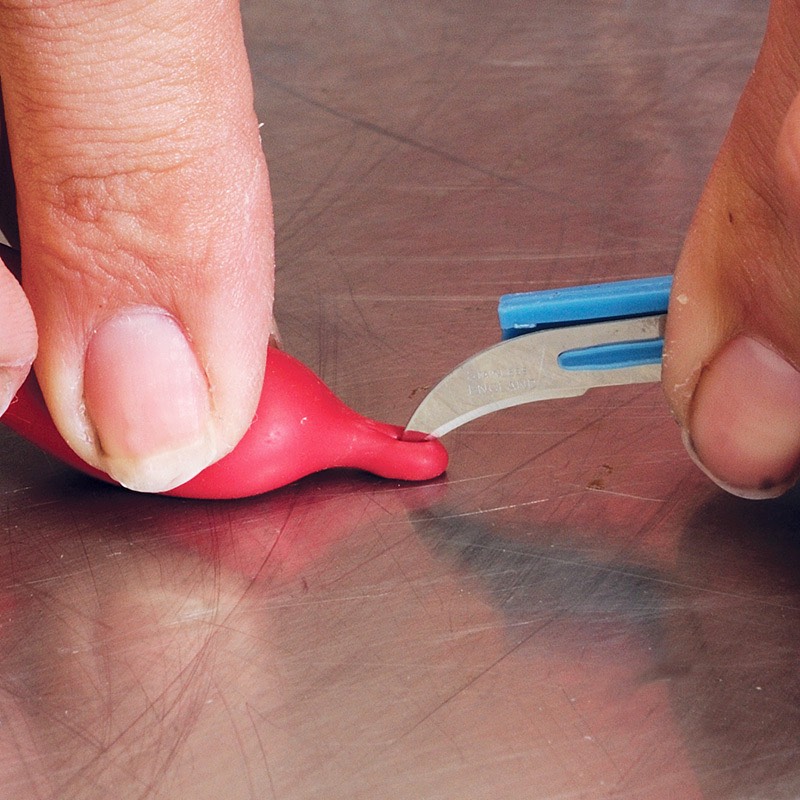
- The most common technique is to use sharp scissors and snip the tip off cross-ways. The more you snip, the bigger the hole, so don't overdo it.
- Wash before each use.
- Screw off lid.
- Fill as needed.
- Screw lid back on.An alternate method is to not cut off the tip, but instead carefully slit the end into two halves with a razor. The two halves snap back together when not in use and self seal the end of the teat. Most importantly, this self-sealing method of cutting the teat allows you to place the teat in a partially inverted position, from which the lambs can suck at will.
-
Cutting the Pritchard Teat
Teats are supplied with no hole in the end and must be cut before use. Two different techniques can be used to cut the teat:
Tips
- To supplement mother’s milk for newborns. A ewe’s full milk flow does not kick in until after lambing. If a ewe is short of milk immediately post-lambing we supplement the lambs (still with the ewe) with milk or colostrum via bottle.
-
As an alternative orphan feeding system. How? Provide milk in bottles instead of buckets for 3 weeks.
- Feed 3 times per day.
- Drop bottles into bottle rack. Leave in place while you finish chores.
- Return and remove bottles. Many lambs become bored and chew on empty nipples.
When to use this system?
When feeding, position the teat as high as a normal mother’s teat, about 9"–12" above the ground.
Why so low? When a young ruminant stretches out its neck to nurse, their esophagus elongates and forms a groove that carries the milk into the 4th stomach (the abomasum).
If the neck is not stretched, the milk falls into the first stomach instead of the 4th. But the first stomach is intended for grass and hay. It doesn’t digest milk well. A first stomach with too much milk enlarges to form a “potbelly”—and the lamb/kid can’t thrive.
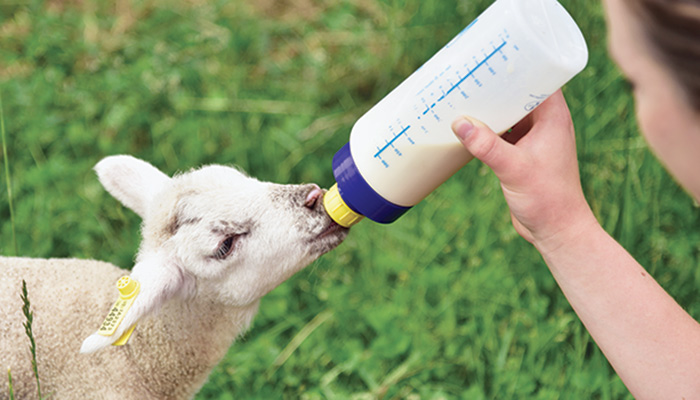 Position the teat about 9"–12" above the ground so the lamb or goat kid must stretch its neck to nurse.
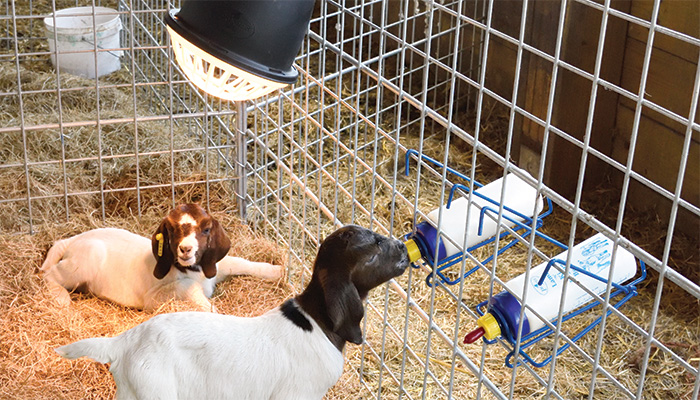 Use a bottle rack to allow lambs and goat kids to self-feed. Fits onto welded-wire panels with 3" or 4" holes